
Leadership, Sustainability, and Purpose: Sajjan Jindal Engages
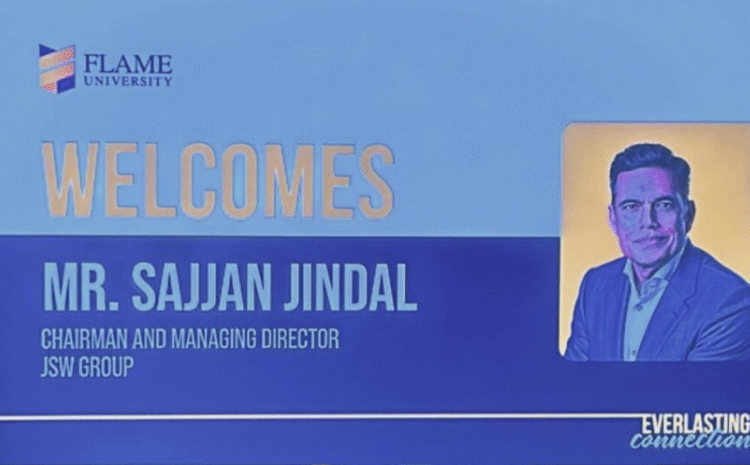
FLAME University has a reputation for blending management education with liberal thinking. One of its strategies is to bring industry heavyweights into the “Guest Speaker Series” so that students don’t just study business theories they meet people from the industry too.
And that’s how FLAME welcomed Sajjan Jindal, who is the Chairman & Managing Director (CMD) of the JSW Group and is a conglomerate with interests ranging from steel to energy, infrastructure to cement. His presence on campus was a bridge between boardroom strategy and student ambition.
FLAME called it a privilege to host him, and rightfully so. Their guest speaker series is about shaping mindsets and the students didn’t just get a chance to listen; but they actually got a chance to see how strategy looks when it’s lived and not just written about. Jindal represents an entire generation of business leaders who’ve transitioned from the “industrial age” to the “sustainability age” without losing sight of purpose.
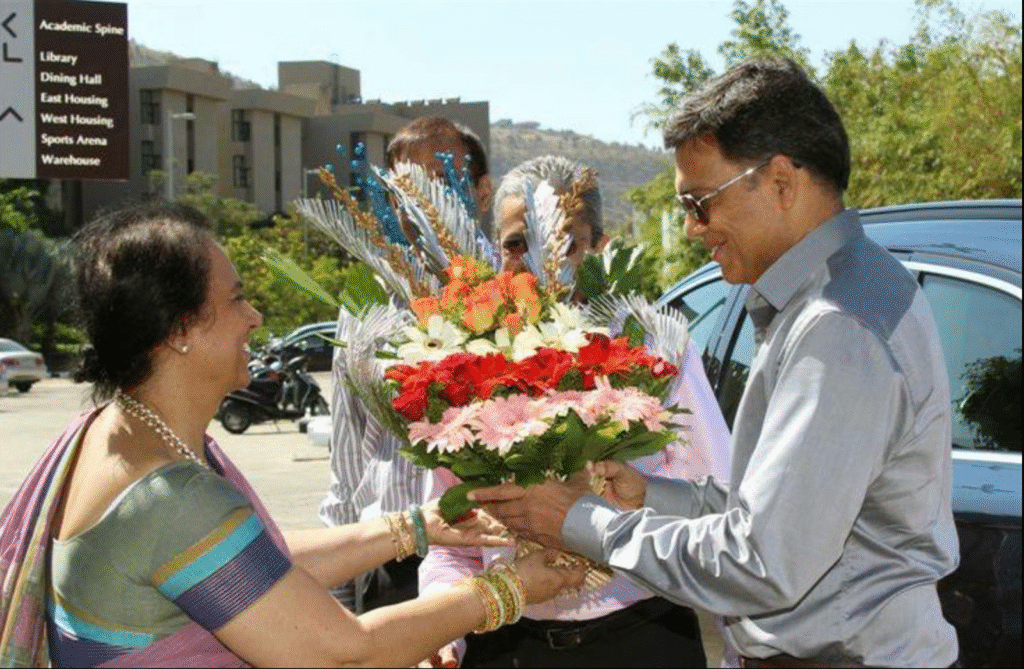
He spoke with clarity, candour, and simplicity that came from years of leadership. His message to the students was direct: the future will belong to those who can build systems, who can marry innovation with discipline and who can find purpose in profit. He reminded everyone that resilience isn’t born out of comfort but instead hardened by challenges.
For the students, that hit home. Many come from backgrounds of art, business, psychology, and philosophy. They study leadership through case studies, but that day, they were in the presence of true leadership.
However, the most resonant takeaway was his emphasis on the human side of business. In an era dominated by automation, AI, and analytics, Jindal spoke about culture, integrity, and ethics as irreplaceable and non-negotiables. He described leadership as stewardship—a mindset that sees companies as ecosystems rather than hierarchies. For many in the audience, it reframed what “corporate success” truly means.
FLAME’s liberal-arts DNA thrives on connecting dots across disciplines. Economics meets ethics. Design meets data. Philosophy meets finance. And Jindal’s visit made that bridge all-the-more visible. When he talked about sustainability, and not just as an environmental duty but as a business imperative, it was the kind of interdisciplinarity that FLAME constantly pushes and strives towards for its students.
After the session, the chatter across campus wasn’t about how rich or powerful he is but instead, it was about how real and authentic he was. The humility behind the success. The grounded wisdom behind the steel.
In a country where education and industry often exist in separate orbits, events like these act as bridges. When Jindal stood before that audience, he wasn’t just sharing his journey. Instead, he was handing over a baton. A challenge, almost. And that was to take the torch forward.
There’s something deeply poetic about that transfer of wisdom. The old guard teaching the new how to rewrite the playbook. Jindal left behind a metaphor for life. He showed that ambition means nothing without ethics, growth means nothing without grounding, and innovation means nothing without impact. For a campus that prides itself on shaping curious, compassionate thinkers, it was the perfect collision of ideology and industry.