
FLAME University Revives BLAZE — The Entrepreneurial Summit that Ignites Ideas and Innovation

After the pandemic shook, a lot of things happened. Some things remained the same, new changes emerged, and some were forgotten and buried in the past–lost in history.
This would have been the story of BLAZE, an entrepreneurial summit by FLAME’s Entrepreneurship Lab, if it hadn’t been revived by the students of FLAME within 50 days in 2024—five years after its discontinuation.
BLAZE has always been more than a university event. It’s a culture that celebrates risk, creation, and collaboration. And this is why, four students—Vir Kedia, Heetej Jagatia, Keegan Menez and Sammeta Kini, under the guidance of Prof. Vishal Shah, decided to bring back that blaze in the university.
BLAZE 2024 was a two-day extravaganza designed to pull ideas out of notebooks and put them into motion. The summit gathered students, alumni, founders, investors, and professionals from across industries under one sky, pushing everyone to think faster, speak bolder, and act bigger. The theme this year wasn’t shouted out loud, but it pulsed through every booth and panel. Igniting ideas that move the world. And move, they did.
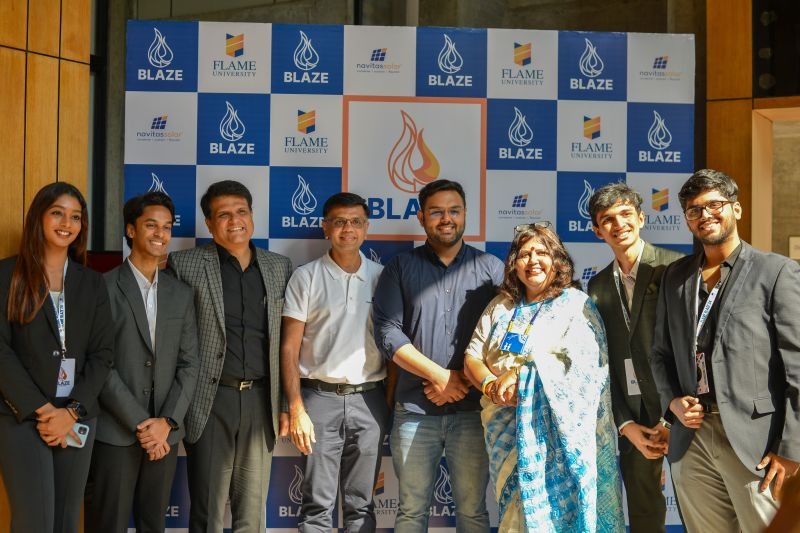
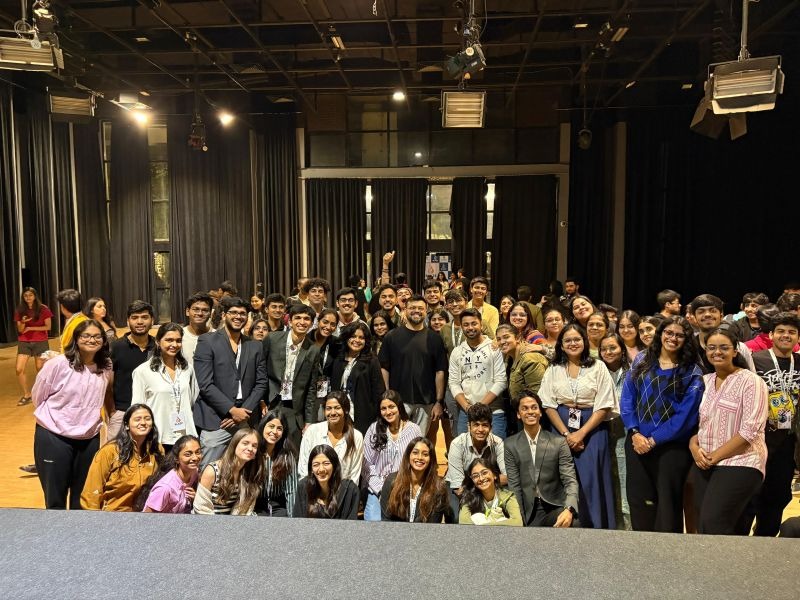
Day one began with a bang. Students flooded the atrium with prototypes, business cards, and wide eyes. Booths lined up along the corridors, some stacked with handmade products, others showcasing sleek tech solutions coded overnight. The lineup of panel discussions, interactive workshops, and masterclasses was as varied as the students attending them. There were hands-on modules about scaling your venture, interactive discussions on investor expectations, crash courses in design-market fit, and open mic-style panels where budding entrepreneurs could pitch ideas and get instant feedback. BLAZE carried a different energy. It wasn’t restricted to commerce or management majors. Design students, liberal arts thinkers, psychology enthusiasts, techies—there was a place for everyone here because entrepreneurship, as FLAME reminded its participants, is about solving problems and telling stories that matter.
By afternoon, the energy on campus had grown more intense. There was something deeply human in the chaos: the shaking hands before a pitch, the burst of laughter after a tricky question or even the triumphant cheer when a judge nodded in approval. It was the kind of atmosphere that turns ordinary projects into movements. When someone’s prototype failed mid-presentation, their friends clapped anyway.. Competitors weren’t enemies here because they were co-conspirators in building something meaningful.
The day ended with a burst of laughter, thanks to standup comedian Mr. Raghav Thakkar, who had the audience in stitches with his relatable and witty humour.
The second day opened on a high. The fatigue of long hours and sleepless brainstorming was replaced with a drive. The highlight of the day was the grand pitch competition, the heartbeat of BLAZE, where finalists stood in front of a panel of investors and mentors to sell their dream in a matter of minutes. Every story carried a different vision of the future, and every founder spoke like it could actually happen.
The event wasn’t chasing “the next unicorn.” It was about finding the next meaningful solution. For people who took part in this, it was a reminder that ideas become real only when they’re shared.
What truly defined BLAZE 2024 wasn’t just the competition, though. It was the in-between moments. There’s a particular beauty in watching people discover what they’re capable of when no one is handing them a script. BLAZE created that space where you could be both a student and a founder, a dreamer and a doer.
BLAZE 2024 showed how disciplines could intersect. For example, how design could meet data, how storytelling could meet strategy or even how passion could meet profit. The event reinforced FLAME’s reputation as a space that doesn’t just teach business but teaches bravery. It reminded everyone—from first-years to alumni—that innovation isn’t born from comfort zones. It’s born from chaos, late nights, and the stubborn belief that “maybe, just maybe, this could work.”