
FLAME University Hosts Dr. S. Jaishankar for an Insightful Campus Dialogue on India’s Global Strategy
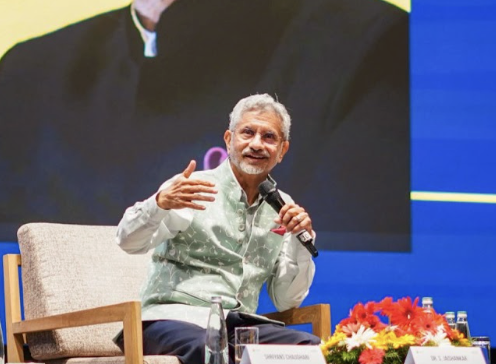
FLAME University hosted India’s External Affairs Minister, Dr. Subrahmanyam (S.) Jaishankar, for an on-campus interaction that felt equal parts lecture, fireside chat, and rapid-fire Q&A. The event covered big geopolitical themes (India–China ties, regional strategy, global posture) while giving students room to ask pointed and resonant questions
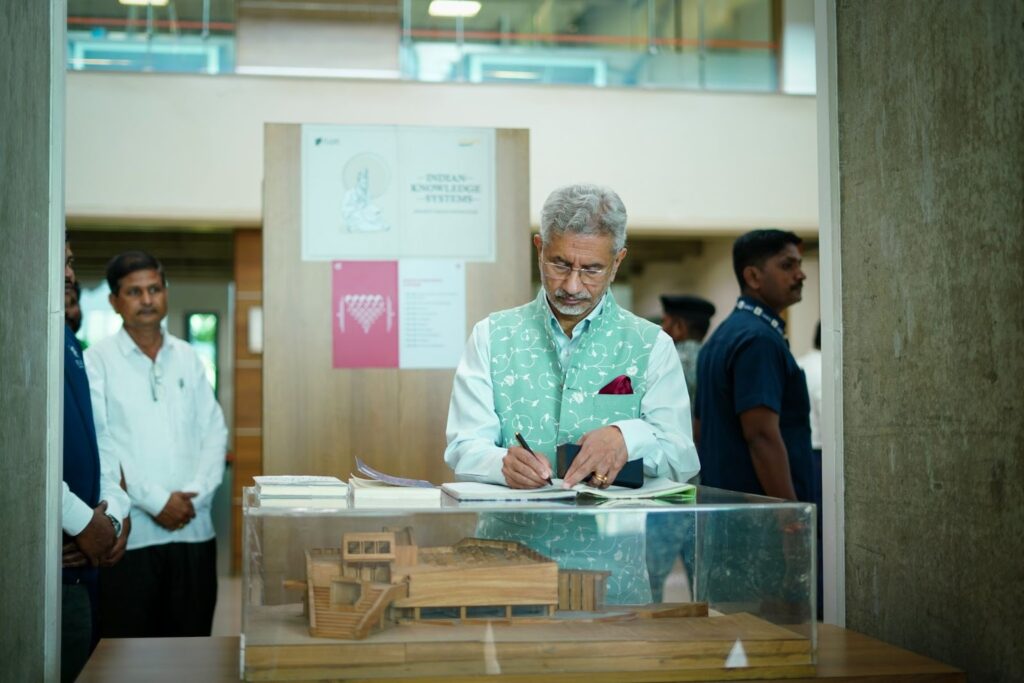
There were three macro-threads that dominated the conversation: a. the India-China relations and the Line of Actual Control (LAC), b. the harmony between diplomacy and military and c. India’s global standing and relationships across the world.
Jaishankar addressed the tensions along the border and explained that progress on patrolling and disengagement has been incremental but real. He heavily emphasised that while breakthroughs have occurred, normalisation is a long and tedious process that may test one’s patience. however, to have progress, there must be consistent diplomatic follow-through. This point was repeatedly underlined during his remarks, especially when answering questions during the Q&A.
He repeatedly credited both military resilience and diplomatic negotiation of the country for stabilising the tensions at the borders. He called the military’s role “incredible” in challenging conditions while insisting diplomacy was the way to go for long-term solutions. The key takeaway from this was that India does not treat defence and diplomacy as separate because according to him, they’re part of the same toolkit.
Jaishankar has positioned India as a pragmatic, interest-driven actor by seeking partnerships, preferring engagement over block-picking, and focusing on delivering results in development and infrastructure cooperation
The most electrifying part of the session was the student interaction. Students asked blunt, occasionally uncomfortable questions like on Canada-India tensions, climate diplomacy, and career pathways in international affairs. Jaishankar, in return, didn’t dodge nuance but also didn’t indulge in theatrical obscurity. He answered by providing students with factual context and history.
The room’s tone during Q&A was part academic curiosity and part civic impatience. Were driven with a thirst for knowledge and the truth, and accountability and clear-eyed answers. Jaishankar delivered them; sometimes with dry humour and often with an insistence on concrete evidence.
Jaishankar’s rhetorical tools are predictable in a productive way as he provides historical context, institutional explanation and realist framing. He heavily stressed on process over spectacle and repeatedly suggested that diplomatic wins are often incremental and procedural, and not headline-grabbing summits. That’s a valuable message for students who are used to social-media-driven narratives. He implicitly pushed back on the idea that India should be forced into binary alignments. Jaishankar also pointed out how India’s investments in infrastructure and resources at the border over the last decade have changed the operational calculus since more roads, logistics, and preparedness enables sustained presence and leverage in negotiations.
One thing to be noted is that he didn’t offer sweeping promises of quick fixes. That restraint matters as foreign policy is a domain where overpromising is a common temptation, but Jaishankar stayed tethered to a modesty of outcome and an emphasis on steady and measurable gains.
The university strategically used the event to communicate its educational mission which is that students aren’t just consumers of knowledge but they deserve to be participants in national conversations. The seats were filled to the brim, the moderator kept pace, and the minister moved between wide-angle policy and micro-level answers. The livestream made the event more than a campus moment as it became part of a national conversation for the many viewers watching online, so much so that news outlets caught onto this session as well. That multi-angle coverage shows how a single event can feed multiple narratives depending on editorial choice.
The key takeaways for students that they can implement in their future career are that diplomacy is iterative and detail-heavy. Students learn the value of interdisciplinarity and understand how to question smartly.
The nature of the session alone created value as students gained exposure to the mechanics of policy and not just knowledge they would find in a book. On a national level, the event reinforced a set of narratives like diplomacy, strategic autonomy, and the balance of hard and soft power that the government has been cultivating.